Market Overview

Market Overview
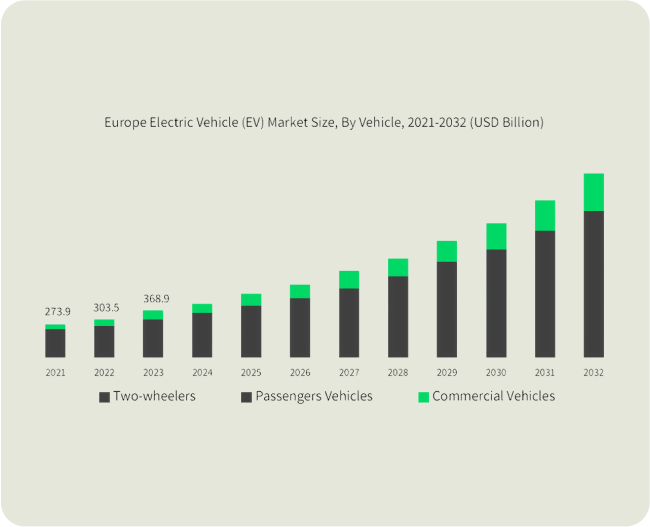
The European electric vehicle market is undergoing a transformative phase, characterised by significant technological advancements, increasing consumer acceptance, and robust government initiatives aimed at achieving sustainable transportation.
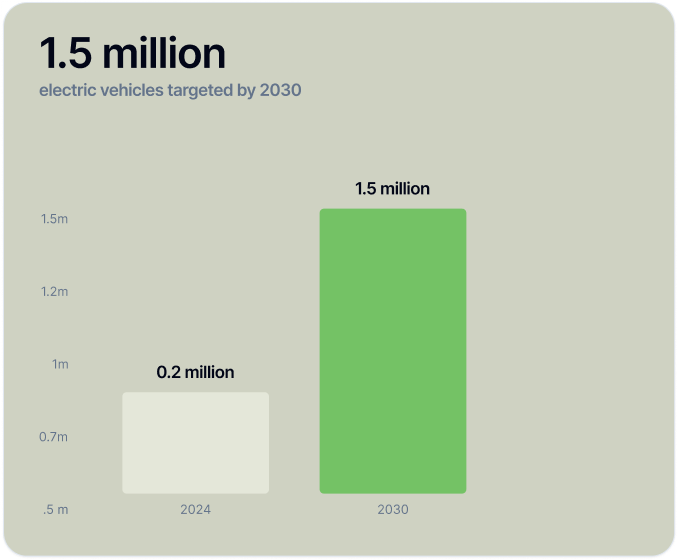
1.5 million electric vehicles targeted on Spanish roads by 2030.
100,000 public charging stations to be installed in Spain by 2025.
30 million electric vehicles aimed for the EU by 2030.
Europe is investing over €1 billion in EV infrastructure via the Connecting Europe Facility.
EU's Green Deal aims for Europe to be climate-neutral by 2050.
22% of new car registrations in the EU were electric vehicles in 2023.
European Market Dynamics
- 2024 Projections: The European EV market is set to reach approximately 4.6 million units sold, representing a substantial 29% share of the total vehicle market. This growth is driven by the introduction of new models, improved consumer awareness, and extensive marketing efforts by manufacturers.
- By 2030, EV sales in Europe are projected to exceed 10 million units, indicating a rapidly expanding market. This trend is supported by projections that over 50% of new car sales in Europe will be electric by 2035.
- The European Union (EU) has set ambitious targets under the Green Deal, which aims to have at least 30 million zero-emission vehicles on the roads by 2030.
- Legislative proposals, such as the plan to ban new petrol and diesel car sales by 2035, are pivotal in driving the transition to electric mobility.
- The Fit for 55 package aims to cut greenhouse gas emissions by at least 55% by 2030, further reinforcing the push towards EV adoption.
- National Incentives: Many EU member states, including Spain, are offering incentives such as tax reductions and purchase grants to encourage EV adoption.
- Battery Technology: The demand for lithium-ion batteries is anticipated to surge, with Europe aiming to establish itself as a key player in battery production. Significant investments in battery technology are expected to drive costs down and enhance vehicle range.
- Charging Infrastructure: The European Commission has set a target to install at least 1 million public charging points by 2025, significantly increasing the accessibility of EVs across the continent.
- Sustainable Practices: Initiatives to improve battery recycling processes and promote the circular economy are gaining traction, aligning with the EU's broader sustainability goals.
The Spanish Market
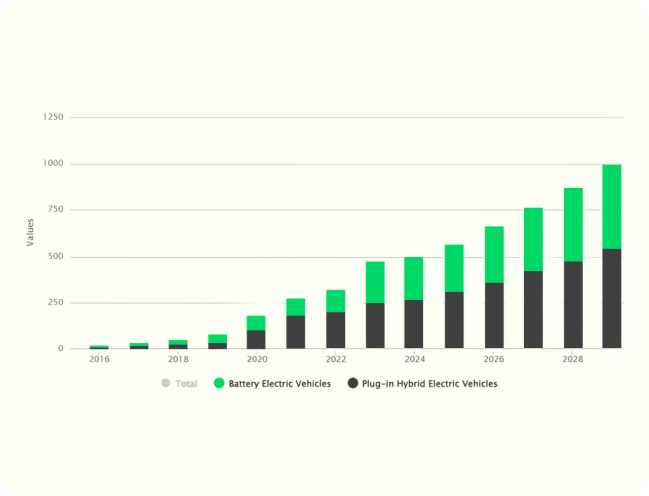
- Spain is emerging as a key player in the EV market, with sales projected to increase by 30% in 2024, driven by government incentives and increased consumer interest. The country aims to have 1.5 million electric vehicles on its roads by 2030.
- Major automotive manufacturers, including SEAT, Renault, and Volkswagen, are expanding their electric lineups to meet growing demand.
- The Spanish government is committed to installing more than 100,000 public charging stations by 2025, focusing on both urban and rural areas.
- Public-private partnerships are essential in accelerating the rollout of charging infrastructure, with investments targeting fast-charging stations and smart grid technologies.
- A growing awareness of environmental issues is influencing consumer preferences, with over 60% of Spanish consumers considering the purchase of an EV in the coming years.
- The government is actively promoting EV adoption through grants and tax incentives, further incentivizing potential buyers.
Global Market Perspective
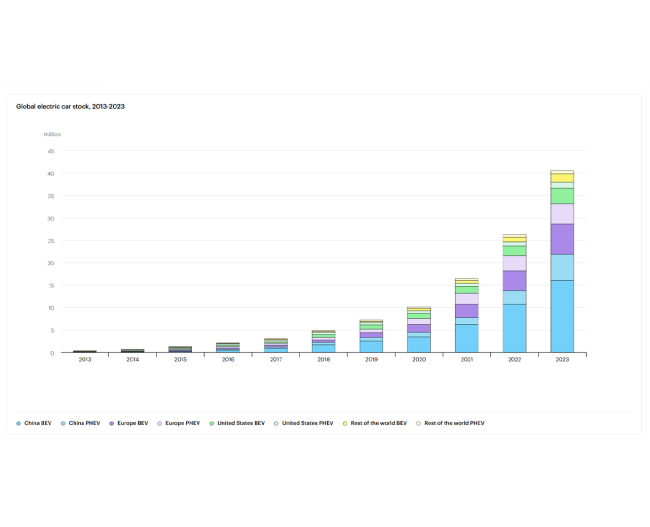
- In 2023, global electric vehicle sales reached approximately 14 million units, with projections indicating that this figure could rise to around 16 million units in 2024. The growth is largely driven by the expanding EV markets in China, the U.S., and Europe.
- By 2030, it is projected that 50% of new cars sold globally will be electric, with demand primarily driven by increasing urbanisation and climate policies.
- China remains the largest EV market, accounting for over 60% of global sales. However, Europe is rapidly catching up, with initiatives focusing on local manufacturing and infrastructure development.
- As global competition intensifies, emerging markets in Asia and Latin America are also beginning to adopt electric vehicles, supported by government initiatives and private investments.
- Global investments in the EV sector are projected to exceed USD 600 billion in 2024, with significant allocations towards battery production, infrastructure development, and technological innovation.
- Venture capital is increasingly directed towards startups focused on electric mobility solutions, indicating a strong belief in the sector's potential.
The European electric vehicle market, particularly in Spain, is poised for significant growth driven by supportive policies, technological advancements, and a shift in consumer preferences. The Euro EV Showserves as a pivotal platform for stakeholders to engage, share innovations, and navigate the evolving landscape of electric mobility.